

One of our favorite things to do in Paros? Slow down and go for a walk. Paros is often all about beaches and beach clubs, but in the middle of Paros, there’s a beautiful surprise: an ancient stone‑paved path that has been used for centuries to connect the villages. The hike on the Byzantine Road in Lefkes is a must-do when you are visiting Paros.
That path is the Byzantine Road between Lefkes and Prodromos, a gentle hike through olive groves and terraces with views over the Aegean Sea and Naxos in the distance. It’s short ( 4km) and perfect if you want to add a little bit of adventure to your Paros itinerary without tackling anything too demanding. Let us take you along!
How to get to Lefkes
Lefkes is the starting point for the classic Byzantine Road route and one of the prettiest inland villages on Paros. It sits in the hills in the centre of the island, surrounded by valleys and old agricultural land.
You can reach Lefkes in several easy ways:
- By car: The drive from Parikia takes about 15–20 minutes, and from Naoussa around the same, following the well‑signed inland road to Lefkes.
- By bus: In season, KTEL buses run from Parikia and Naoussa to Lefkes; check the latest timetable locally as times change between summer and shoulder season.
- By taxi: If you’re short on time or traveling with kids, a taxi up to Lefkes and then back from Prodromos or Piso Livadi can be a very relaxed option.
Try to arrive in Lefkes a bit earlier, after 10 am, the bigger groups arrive, so you can wander through the whitewashed alleys and visit the impressive church of Agia Triada before you start walking.

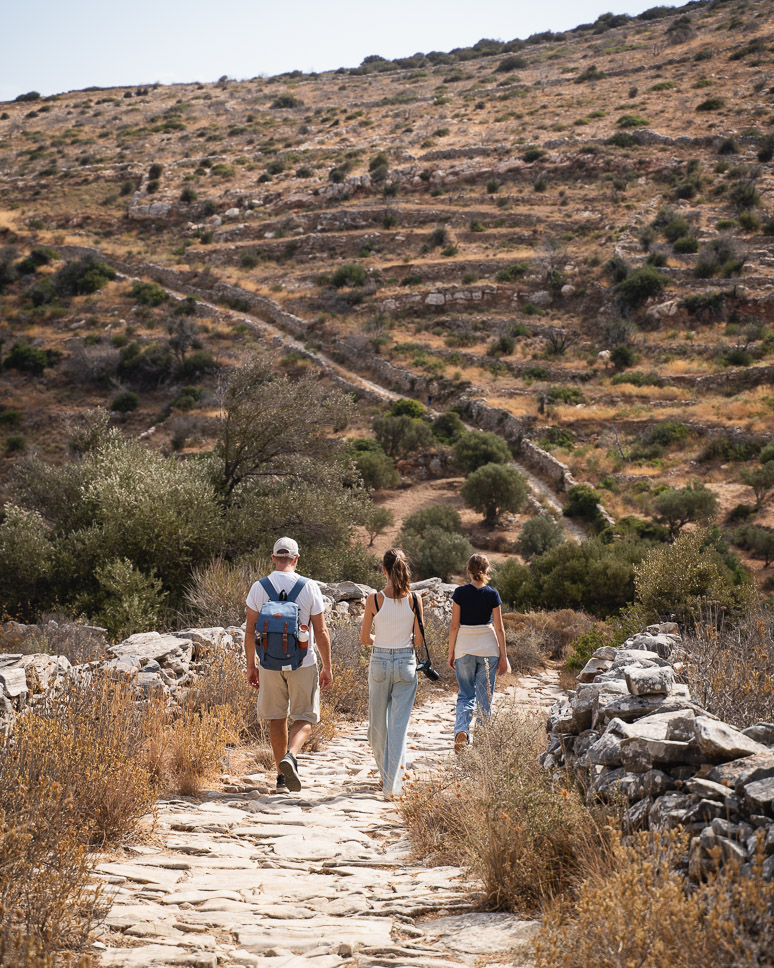
What to know before you go on this walk on the Byzantyne Road
Before you set off on the Byzantine Road from Lefkes to Prodromos, there are a few practical things you’ll want to keep in mind.
- Distance and time: The hike on the Byzantine Road in Lefkes is about 3.5–3.9 km (around 2.2–2.4 miles), and most people walk it in about 1 hour. We did it in 1 hour and 45 minutes because we made a pit stop along the way and, of course, some photo stops.
- Difficulty: It’s generally considered easy to moderate, especially if you walk downhill from Lefkes to Prodromos, with mostly gentle gradients and just one short, steeper section.
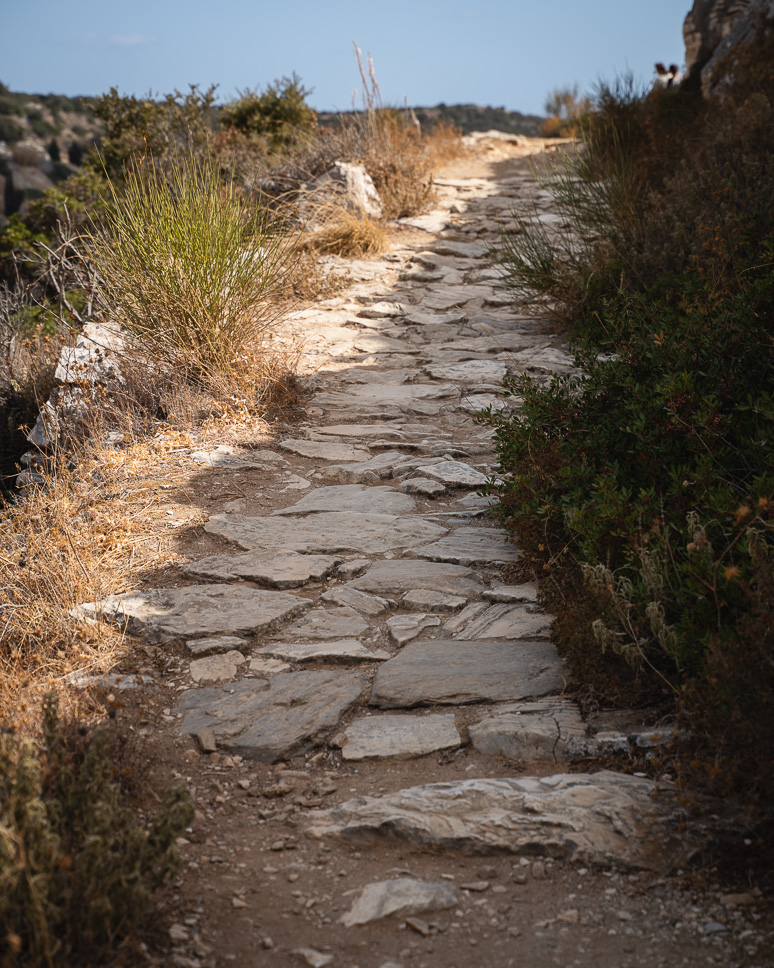
- Footwear: Wear proper walking shoes or sturdy sandals; parts of the path are rocky or uneven, and some stretches still have original marble slabs.
- Shade and heat: There is little to no shade along the trail, so avoid the hottest part of the day in summer and make sure to bring a hat, sunscreen, and plenty of water.
- Way‑finding: The route is well‑known and generally easy to follow, with signs and markers indicating “Byzantine Road” or “Byzantine Trail,” but having an offline map or hiking app always helps. We always use the Maps.me app.
- Kids and families: Many hikers describe it as a manageable, fun walk for families if you take your time and start early in the morning or later in the afternoon. Promising an ice cream can help a lot 🙂
If you’d like to make a full day of it, you can continue from Prodromos down to Marpissa and to the coastal village of Piso Livadi on connected paths and roads, finishing at the sea.

Part 1: From Lefkes village to the start of the Byzantine Road
Start your hike in the heart of Lefkes. This old mountain village is all whitewashed lanes, flowers, and quiet corners, with the church of Agia Triada watching over everything from its hilltop. Stroll through the pedestrian streets, follow the cobblestones as they wind downwards, and keep an eye out for the brown or white signs pointing towards the “Byzantine Road” or “Byzantine Trail.”
The exact starting point is on the edge of the village, where the houses thin out and the countryside begins. You’ll see a large signboard and the first stretch of stone‑paved path heading away from Lefkes between terraces and old stone walls.
This first section already offers beautiful views back towards Lefkes, with its cluster of houses and the church dome framed by the surrounding hills. It’s a lovely spot to stop for a last village photo before you properly “step into history” on the ancient road.

Part 2: Walking the ancient marble‑paved trail
Once you’re on the Byzantine Road itself, the feel of the hike changes. You’re walking on a path that dates back roughly to the Byzantine era, around 1,000 AD, and is considered the oldest road on Paros. Large sections are still paved with Parian marble slabs and worn stones, and you can imagine donkeys, farmers, and traders using the same route centuries ago.
For most of the way, the path traverses the side of the hill, gradually descending towards the valley. On one side, you often have dry‑stone walls and terraced fields, reminders of the island’s agricultural past. On the other side, olive groves, patches of low scrub, and open views stretch out towards the sea, with Naxos visible across the channel on clear days.
There is one section where the path climbs more steeply and passes through an area that has seen fire in the past, giving it a slightly other‑worldly look with darkened trunks and open slopes. Take it slowly here, especially if you’re hiking with kids or in hotter weather. After that, the trail becomes gentler again and continues its steady journey towards Prodromos.
Along the way, simple wooden or metal posts and painted waymarks confirm you’re still on the right track. But even without them, the path feels like it naturally guides you between stone walls, past old fields and scattered farm buildings.

Part 3: Arriving in Prodromos (and what to do next)
Eventually, the white houses of Prodromos appear ahead of you, and the trail leads straight towards the village, framed by the last fields and small plots of land. As you approach, the Byzantine Road turns back into village streets, and you enter Prodromos through a series of narrow alleys and archways.
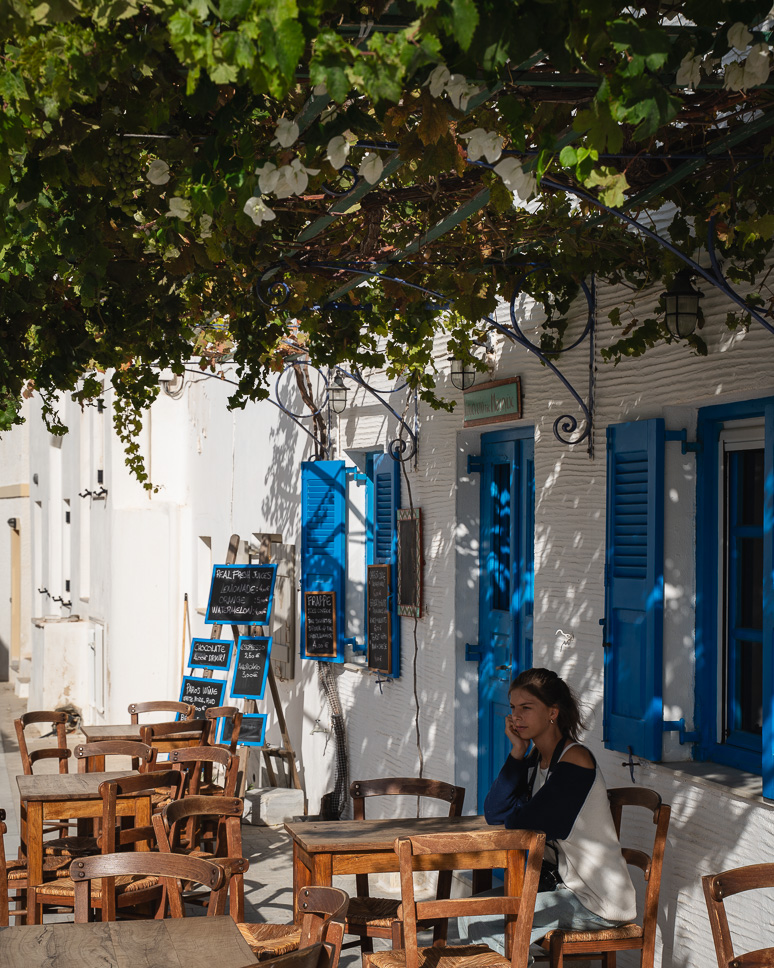
Prodromos is a small, authentic Cycladic village with quiet lanes, low houses, and a few local cafes or tavernas where you can sit down for a drink or lunch after your walk. Our favorite tavernas are Kallitechniko and Byzantino. Both of them are great places to have lunch. Many hikers like to end their hike here, have a meal, and then either:
- Take a bus or taxi back towards Parikia, Naoussa, or Lefkes, depending on connections and timing. The bus stop is just outside the centre of Prodromos, next to the Altana bar.
- Alternatively, you can continue on foot towards Marpissa and Piso Livadi, making the day a longer, mostly downhill hike all the way to the sea.
If you’re keen for more walking and want a bigger workout, you can also do the route in reverse from Prodromos back up to Lefkes, which is steeper and involves more elevation gain. Local hiking organisers even suggest longer loop options in the broader Lefkes valley, combining the Byzantine Road with other old footpaths for 6–15 km hikes.


Where to stay in Lefkes and Prodromos
If you want to turn your hike on the Byzantine Road into more than just a day trip, staying in Lefkes or near Prodromos is a lovely idea. You get quiet evenings in the hills, easy access to the trail, and you’re still only a short drive from the beaches and bigger towns.
Places to stay in Lefkes
Lefkes has a mix of traditional houses, small hotels, and stylish villas. It’s a nice place to spend 2 or 3 nights during your road trip in Paros.
From most of these places, you can walk to the start of the Byzantine Road in under 15 minutes, making it easy to set off early before the heat.